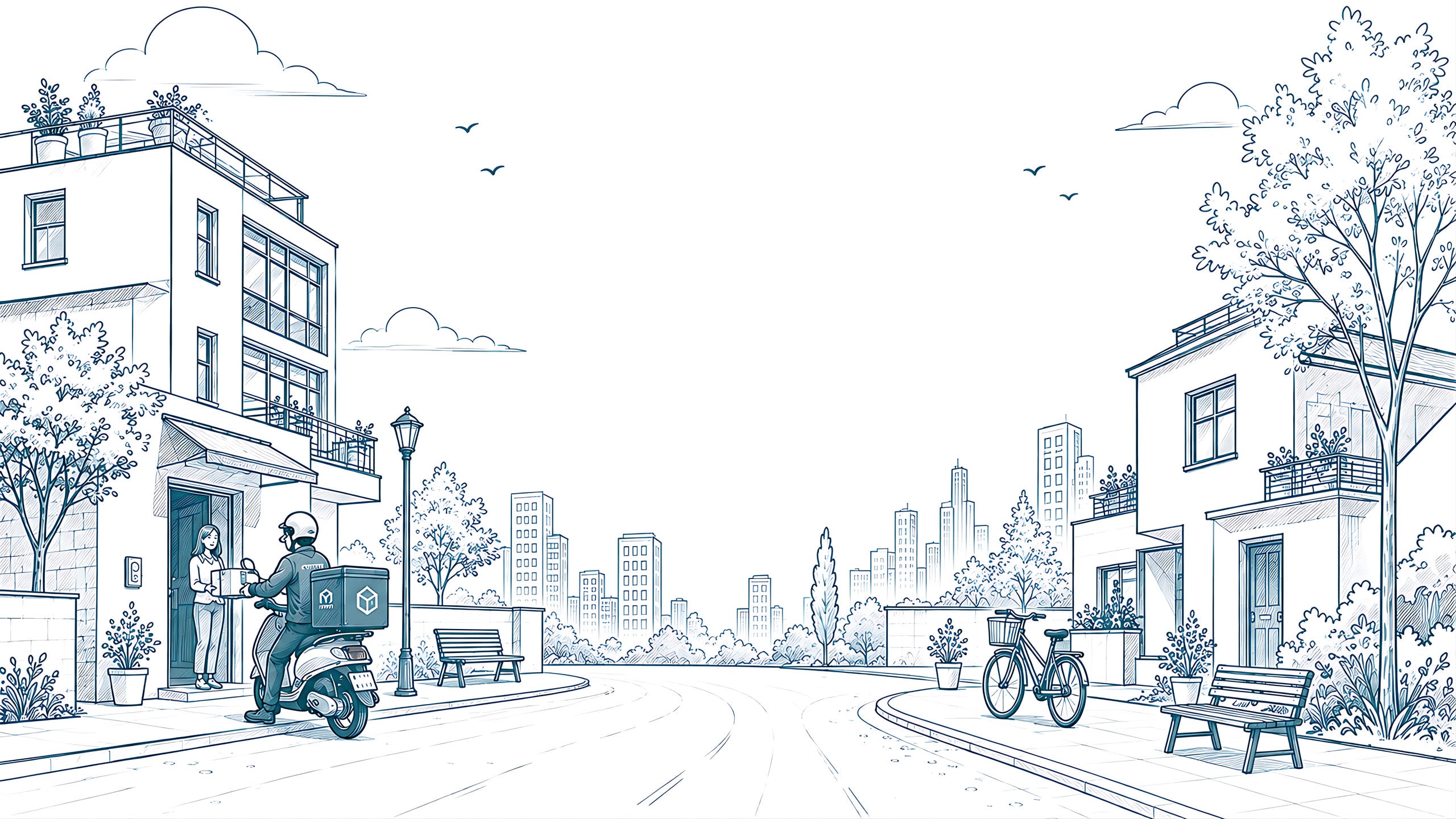
The rider reached the gate.
Aravo tells you if he reached the door.
From the building gate to the customer's door - every step, every floor, every delivery. Verified.
View the DashboardEvery delivery, from the gate to the door
Recorded by Aravo
No new app. No hardware. No change for the rider.Just proof - floor by floor, step by step, door by door.
Unverified deliveries. Endless disputes. Zero proof.
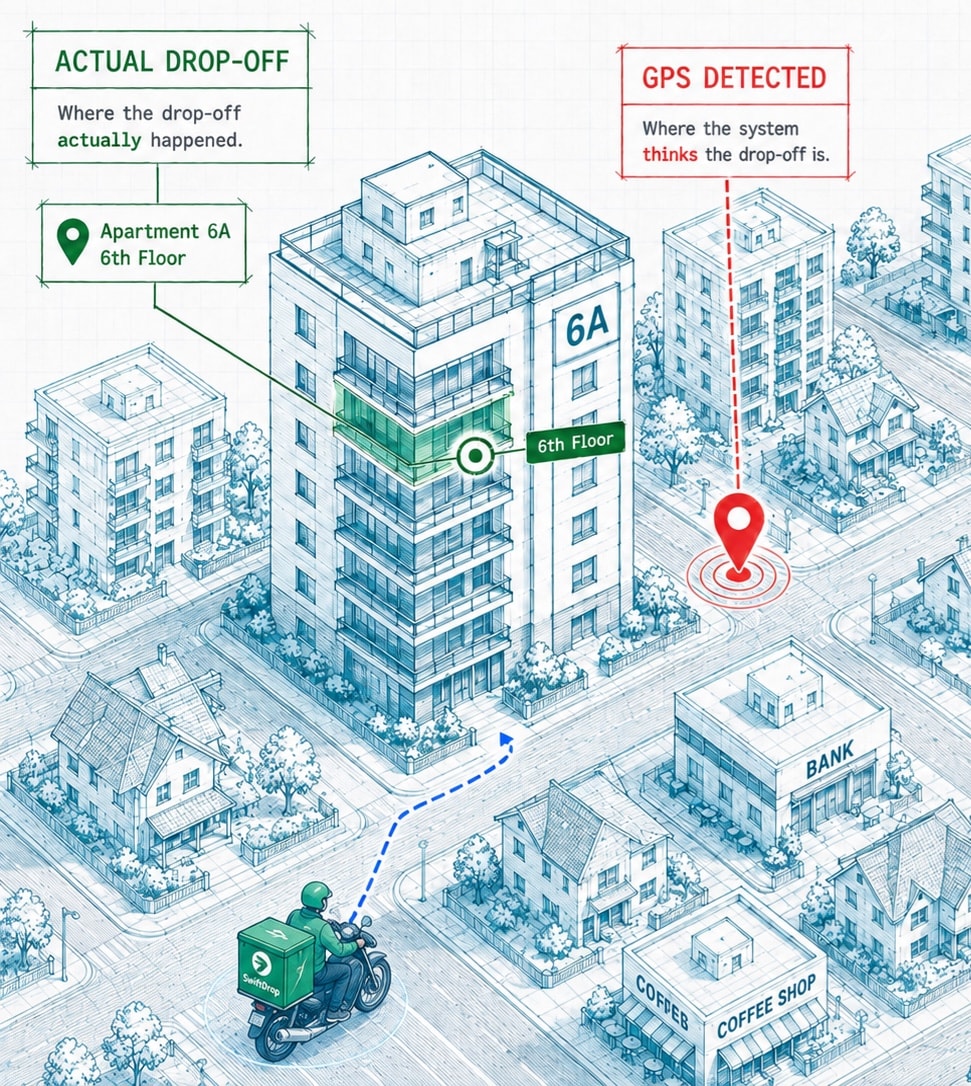
A single tap makes it delivered. But which floor? Which door? GPS shows the street, not where the package actually landed.
- ₹4,800 Cr.
- Lost to delivery fraud every year in India.Estimated false delivery claims across last-mile logistics.
- ₹54,000 Cr.
- India's last-mile delivery market in 2024.Growing at 13.7% annually.
- 01
GPS dies at the building entrance
The moment a rider walks through a gate or lobby, GPS drifts. No system knows which floor he went to, or if he went up at all.
- 02
OTP proves a call was made. Not a delivery.
A rider can call, get no answer, and mark it delivered. Or share the OTP over the phone. The order closes. The customer never got it.
- 03
Disputes are settled with nothing
Your ops team gets a complaint and checks the GPS. It shows the street. That is all they have. Every dispute costs 15 to 30 minutes of manual investigation.
Stop paying refunds for deliveries that happened
Aravo gives your ops team floor-level delivery proof, so every refund decision is backed by data, every dispute is closed in seconds, and every rupee lost to false claims is recovered.
Last 100 metre proof
Every step from the society gate to the customer's door, time stamped and on record.
Dispute resolution in seconds
Your ops team sees exactly which floor and door the rider reached. No calls. No guessing. Just proof.
Fraud pattern detection
Aravo flags riders who consistently mark delivered without reaching the door, before it becomes a pattern.
Refund intelligence
Approve genuine refunds instantly. Reject false claims with evidence. Every rupee accounted for.
One delivery, end to end.
The same four events, arriving as a timeline your support team can read and a payload your systems can act on.
9 Stuyvesant Oval, 10009
Order A-4417
In-building
4:06 - 4:10 PM
Driver journey
Delivered to 9 Stuyvesant Oval, 10009
- Driver entered the building4:06:47 PM
- Driver ascended ~3 floors4:07:12 PMStaircase
- Driver dropped off package4:10:12 PMIn-building
Delivery snapshot
Times and locations reflect observed device readings
- Date
- Jul 31 2026
- Total time
- 07m 34s
- In building
- 04m 13s
- Elevation
- ~3 floors
Plan view
Level 03Settle a dispute with the middle of the trip
The floor, the door and the timings are on the record, so a claim is answered with what happened rather than with what was assumed.
See where time actually goes
Parking, walking, climbing and waiting are separate numbers. The one to fix is usually not the one anyone guessed.
Send a driver to the right entrance
Once a building has been delivered to, its entrance and vertical route are known — and the next driver does not have to work them out again.
Four lines of SDK code. Full delivery visibility.
Aravo plugs directly into your existing driver app. No second app, no new hardware, no retraining your riders. Your team gets floor-level proof from day one.
- 01
Install
Add the package for your platform.
- 02
Configure
Once at boot, with a fleet-scoped key.
- 03
Bracket the stop
Start and end each delivery.
- 04
Receive
Events arrive on your webhook, signed.
import com.aravo.sdk.AravoTracker

AravoTracker.configure(
    context = applicationContext,
    apiKey = BuildConfig.ARAVO_KEY,
    driverId = session.driverId,
)

val stop = AravoTracker.startDelivery(
    orderId = "A-4417",
)

// parked, entered_building, ascended and
// dropped_off are detected on their own.
stop.markDelivered()
Common questions
01How does the detection work?
Sensor fusion on the driver’s own phone. Motion, barometric pressure and satellite signal quality are read together — the combination is what distinguishes entering a building from stopping outside one, and one storey from three.
02What does it need from the phone?
Background location, motion, and the barometer. Each maps to a specific capability, and the SDK degrades rather than fails when one is refused: without the barometer, floor ascent stops being reported and the other three events continue.
03What happens to battery life?
The SDK is built around sensors that are already running for other reasons, and it does not hold a continuous high-accuracy location lock. Measure it in your own app before you ship it — that is the only number worth quoting.
04Do drivers have to do anything differently?
No. There is nothing to tap and nothing to scan. The four events are detected, not entered, which is the reason the data stays consistent across a fleet.
05Where does the data go?
To your webhook, signed, within seconds of detection. Verify the signature before trusting the body — the endpoint is public by necessity.